Wild Camping in the Scottish Highlands
visited: oct 2024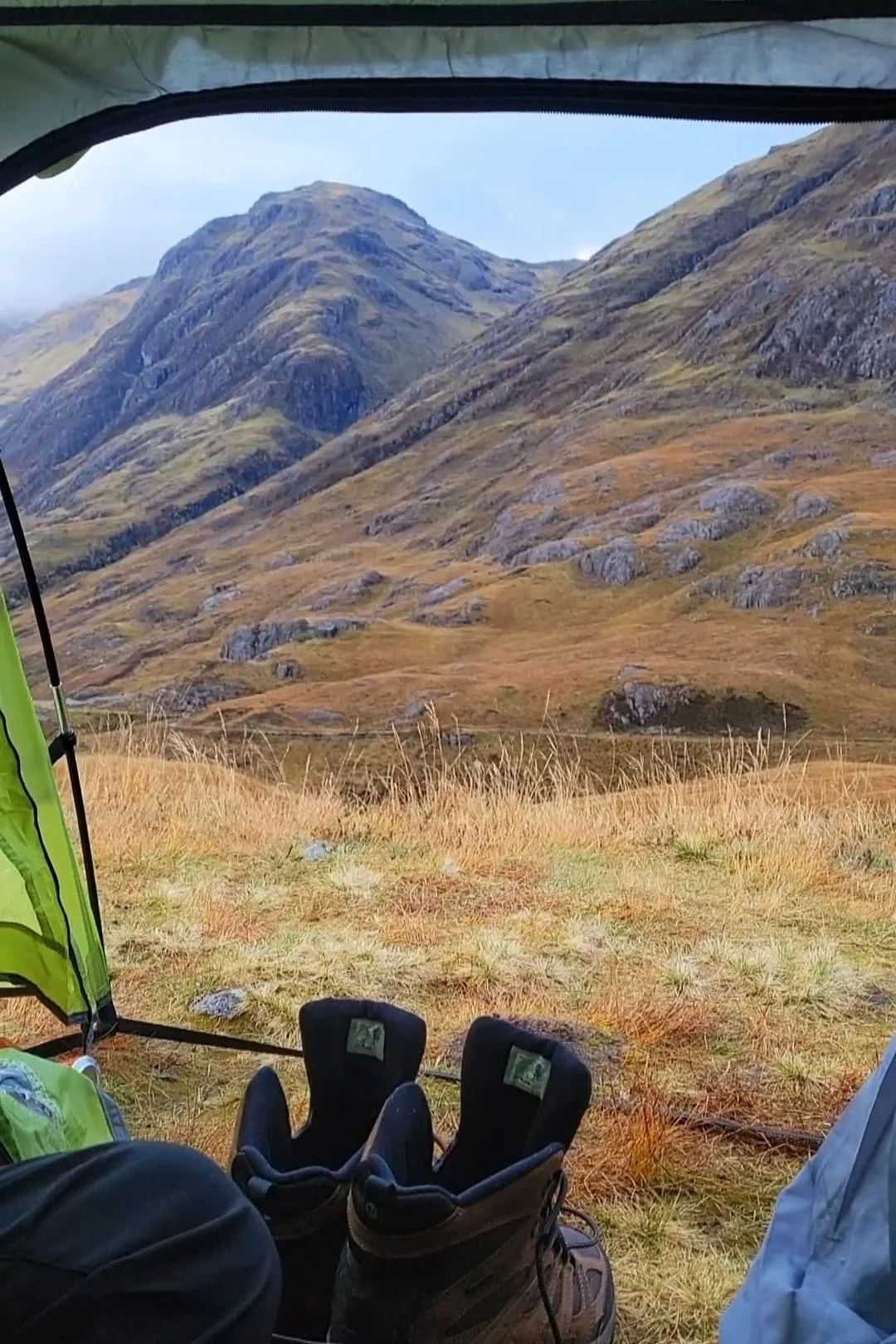
View from our tent in Glencoe
Scotland’s Outdoor Access Code basically means that people have the right to access land, regardless of whether it is privately owned. Of course, there are some restrictions and basic common decency to follow, but as long as you follow the rules, you are free to camp nearly anywhere in Scotland.
So, what are the rules?
Don’t camp in enclosed fields with crops or livestock.
Camp away from roads, historically significant areas and buildings.
If you want to camp near someone’s home, ask permission first.
Don’t camp in large groups, and if there is another group already there, move on to a new location.
Follow the “leave no trace” rule. This includes using stoves instead of campfires when possible, leaving no rubbish or belongings behind, and using a toilet trowel when necessary.
Stay no longer than 3 nights in any given spot.
Essentially, be respectful of the people and place, and make sure when you leave, the site looks like you were never there!
How to find a site…
When finding a place to pitch your tent, keep these things in mind:
Find somewhere high and dry, remember that water flows down, and Scotland is known for being rainy the majority of the year. Pitch your tent somewhere the ground isn’t squishing beneath your feet.
Remember to pay attention to possible hazards; that is to say, if you’re camping in the mountains, set up where you’re not in danger of falling rocks. If you’re camping on the beach, remember to look up tide times and pitch your tent far enough away that you won’t have issues.
The wild camping rules do not apply to the Loch Lomond & Trossachs National Park region. Due to overcrowding, there are restrictions on access here. Keep this in mind while planning.
Set up camp before the sun goes down. Trying to find a suitable site in the dark isn’t easy, so be sure to locate and pitch your tent before sunset.
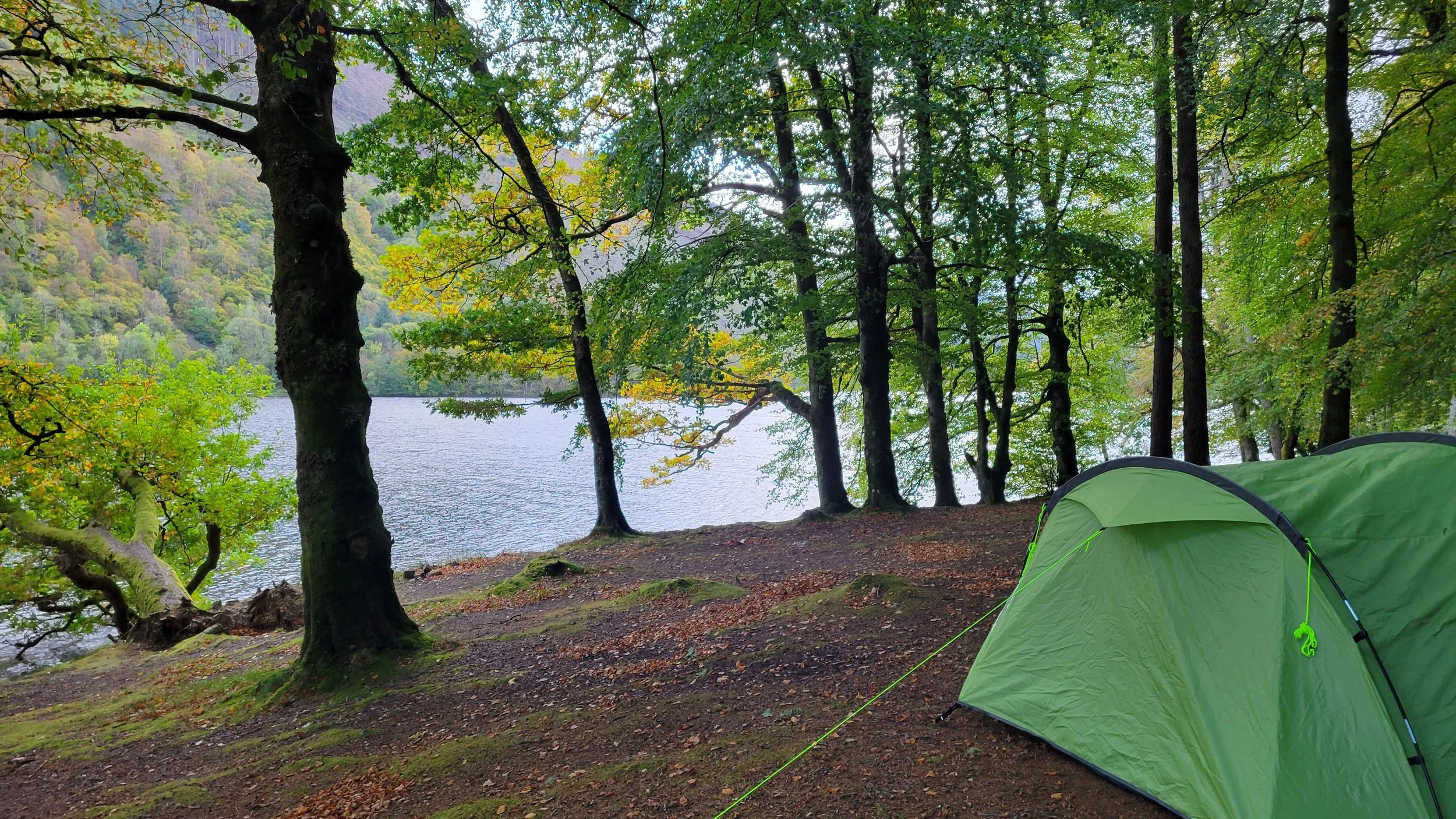
Set up next to a loch
Before you go!
Remember to pack for the weather and keep in mind that in the Highlands temperatures can fluctuate between seasons and even hour by hour. Bring layers so you can adjust as needed.
Choose a sleeping bag that is for the correct season and temperatures.
Be sure that your tent is highly water-resistant, if not completely waterproof.
Further information about wild camping and the rules around outdoor access can be found here and here.
