A Day in Pompeii: Plan Your Visit to the Lost City
Visited: Oct 2022, Sept 2025Visiting Pompeii needs to be on your itinerary if you’re planning a trip to Southern Italy, especially if ancient civilizations pique your interest. The city of Pompeii was once full of art, culture and life, until Mount Vesuvius erupted nearly 2,000 years ago, leaving the city buried under 10-20 feet of pumice and volcanic ash. That unfathomably thick layer of debris is what preserved the site, allowing us to walk in the footsteps of the Pompeians with such a clear picture of what their daily lives were like.
Though you could easily wander the streets for a full day, plan to stay for at least two hours before the Italian heat has you ready to seek out a comfortable seat and a cold drink!

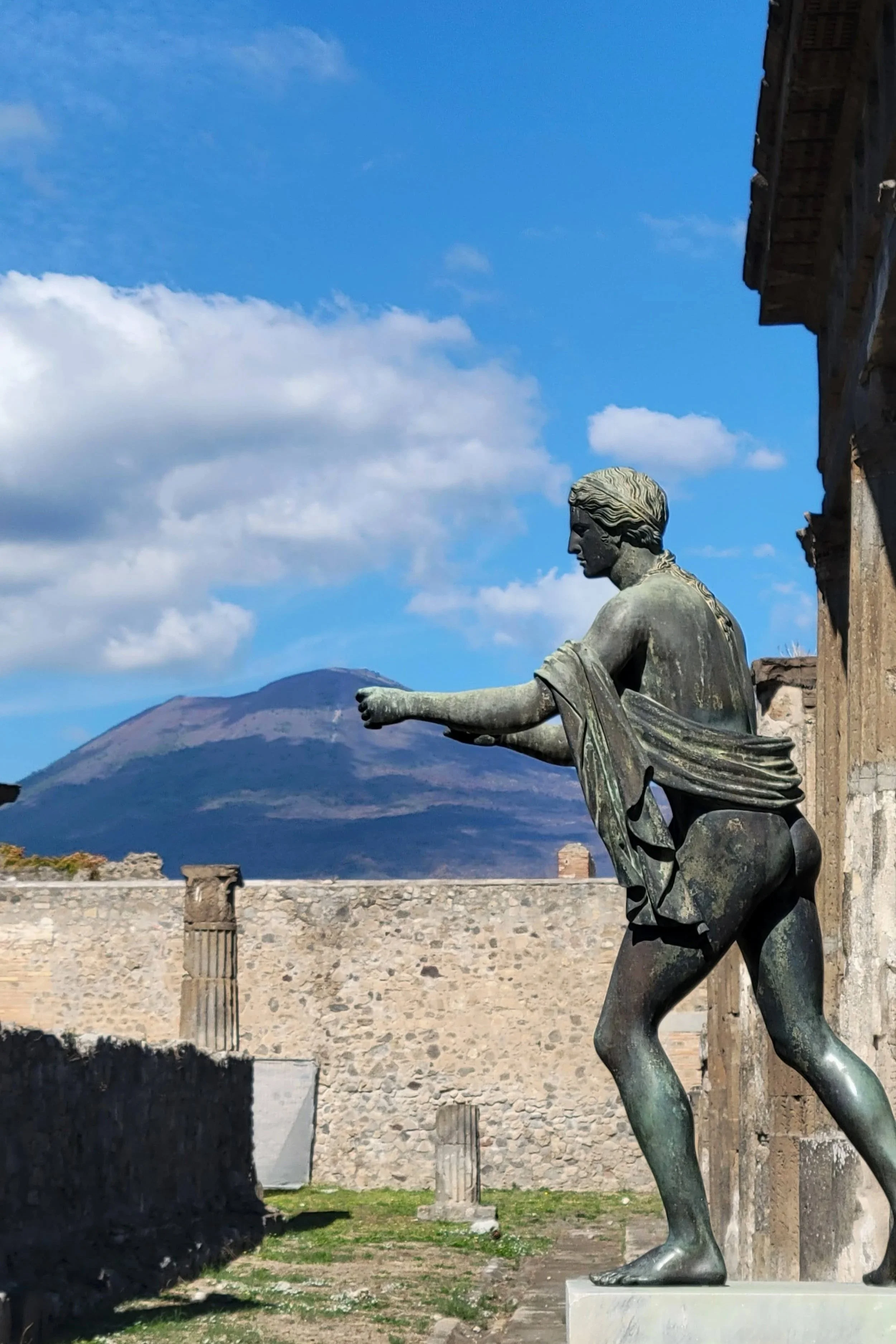
Mount Vesuvius standing in the distance
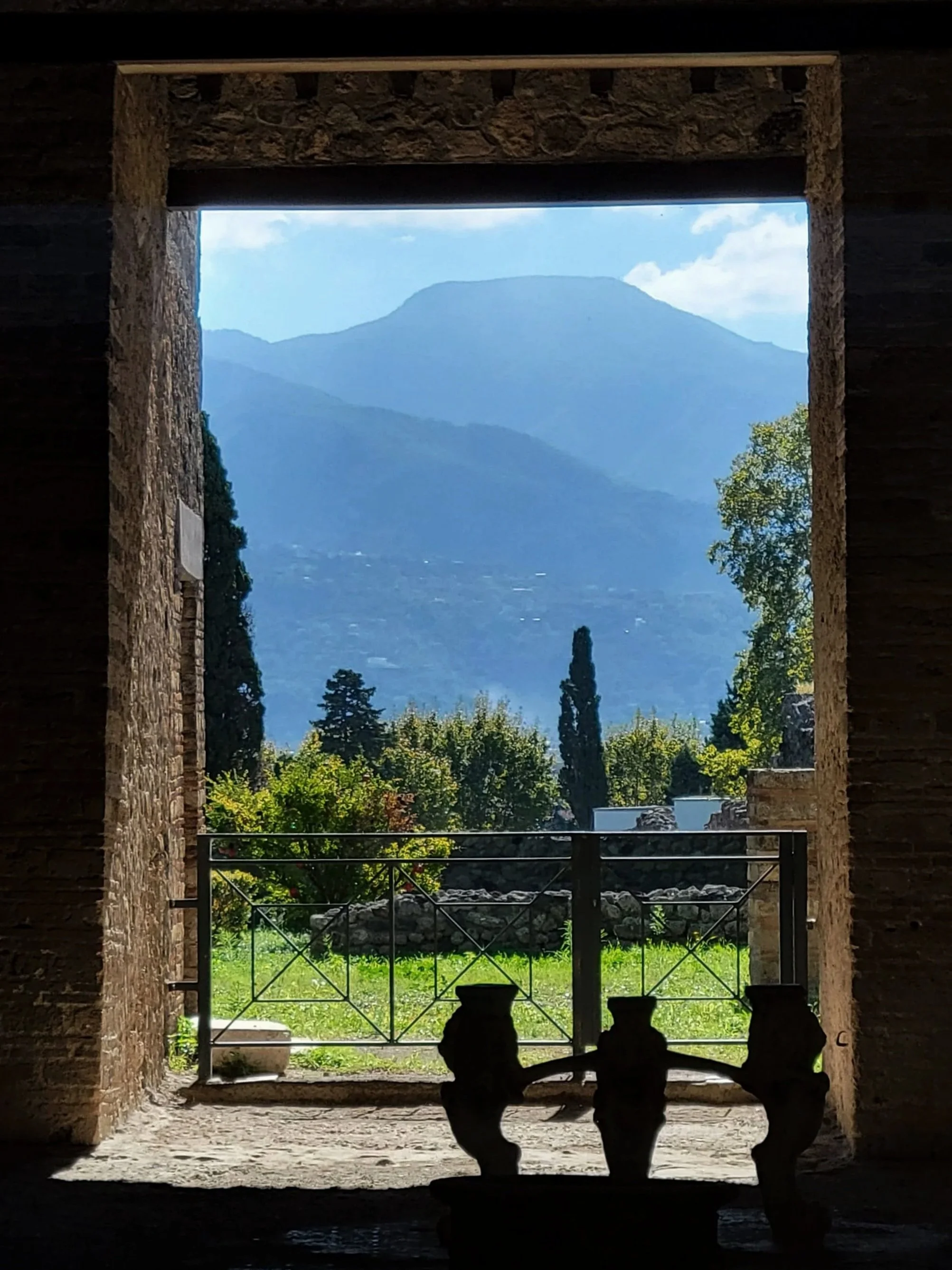
View of the surrounding mountains
Before you go
There are a limited number of available daily entry times, so book your tickets in advance to avoid paying the marked-up reseller fees. You can decide what ticket is best for you here — I recommend the Pompeii+ (or any ticket that includes the suburban villas).
To get the most out of the visit, consider either getting a guide or a self-guided audio tour. You can rent audio tour devices from a number of places along the Via Roma near the Amphitheatre Entrance. Both times I went, I rented them from the one at this location. The extra information adds so much context, history and emotion to the experience as you walk through the ruins.
If you’re looking for a time-efficient and info-packed experience, go with a guide. If taking things at your own pace and getting extra info when something intrigues you sounds more your speed, grab the audio guide.
When you’re booking, plan to visit earlier in the day if you can. By the time 1:00 pm rolls around (especially in the summer months), that Italian sun will be brutal.
Before we continue, one last thing: wear good footwear! I cannot stress this enough. If you think the average Italian roads are uneven, brace yourself. Ancient Rome was on a whole other level.
How to get there
Being such a popular site, there are tons of ways to access it, all depending on where you’re coming from. First thing to know is that the ancient city of Pompeii (two i’s) is located inside the modern city of Pompei (one i). The three closest train stations are called: Pompei Scavi, Pompei, and Pompei Santuario.
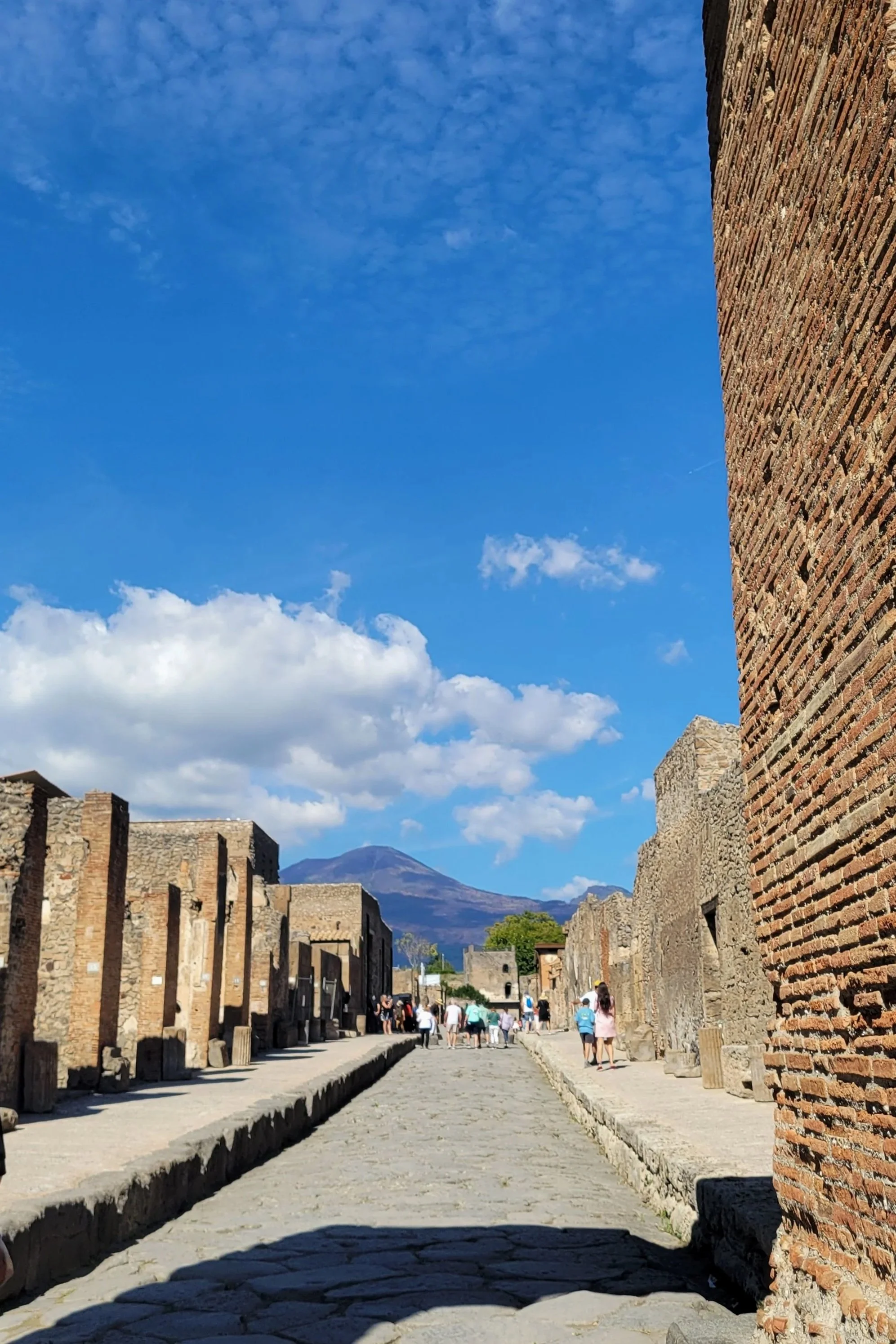
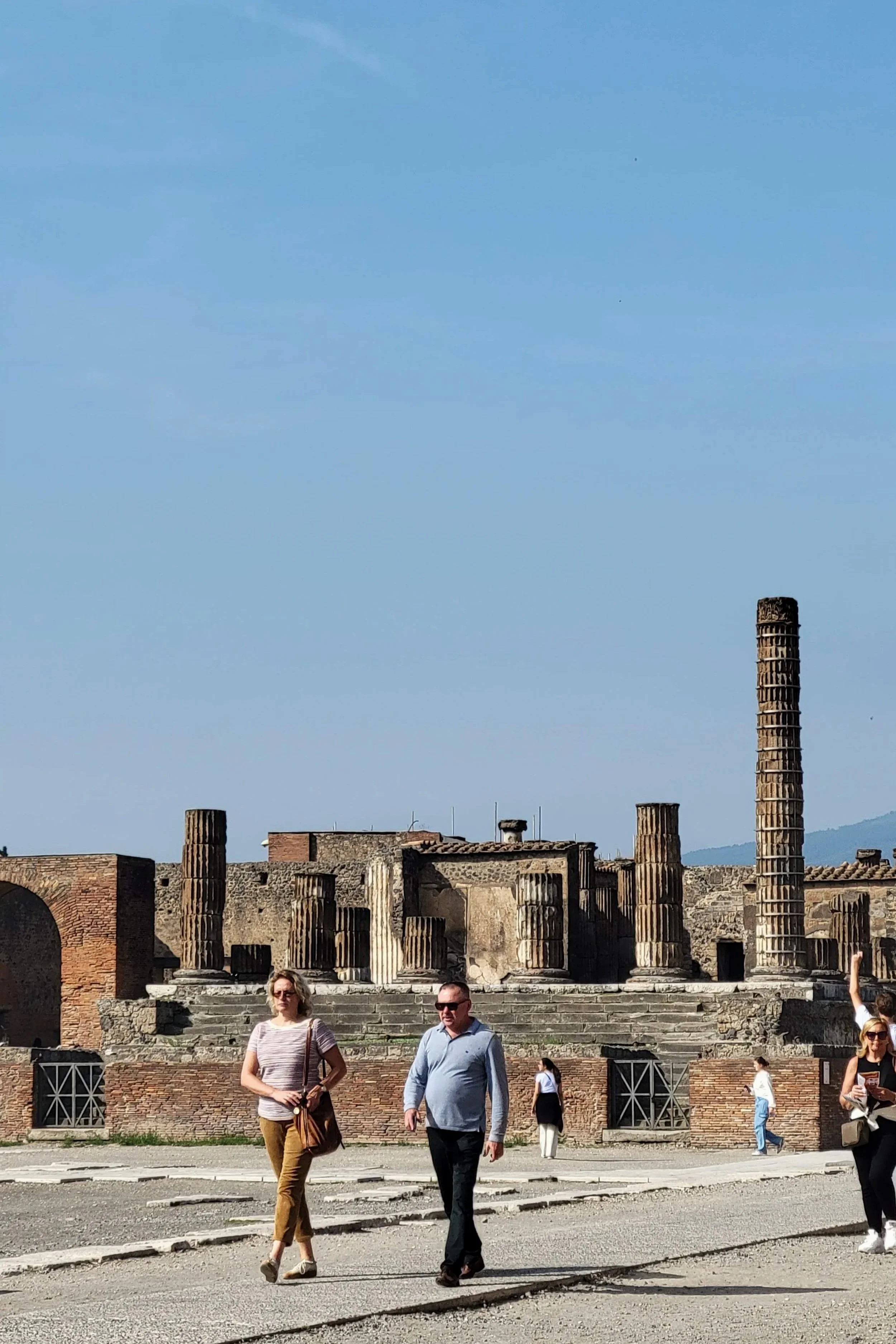
View of Vesuvius from north end of Forum
The Campania Express*
This line has fewer stops than the regular lines, running between Naples and Sorrento, and costs about €15 per person. This option arrives and departs at the Pompei Scavi station, which is nearest to the Porta Marina entrance. From what we found when my Aunt and Uncle used this line, these tickets can only be bought in person at the counter, not online.
Regular regional trains from Salerno/Naples/Poggiomarino
Coming from Vietri sul Mare (one stop over from Salerno) and arriving at the Pompei station, this option only took us about 45 minutes on the train, and cost us under €5 per person. The walk to the Amphitheatre Entrance only takes about 15 minutes, not the 45-minute walk the shuttle drivers quote. That time reflects the distance to the further Porta Marina entrance… don’t waste your money! You can buy these train tickets through Omio or the Trenitalia sites ahead of time, just be sure you select the right stations!
The Pompei Santuario station is on the line that runs between Naples and Poggiomarino, and is a similar distance from the Amphitheatre Entrance as Pompei Station.
Buses*
If you’re under no time constraints, there are buses with routes to Pompeii under both Busitalia and SitaSud companies. I haven’t personally used them to visit Pompeii, but I know they exist, having seen them driving through Salerno many times. I’d suggest looking into them if you’re staying in a smaller town that might not have a train station! If you do decide to take the buses, just note that Italian bus schedules are not the most reliable, and the transit time will be longer than the train.
My “must-sees”
The archaeological site is massive, and trying to decide what to see can feel overwhelming if you’re entering without a plan. I’ve listed some of my favourite sites below to help give you a little direction as you explore. But with that said, make sure you wander! Follow this as a general route, but stop at the sites you pass along the way. There is so much to see, and this kind of semi-established plan will make sure you don’t miss the big stuff.
I suggest entering through the Amphitheatre Entrance. If you do, the sites get more impressive as you go, ensuring that you don’t leave on a less exciting note.
1. Anfiteatro (Amphitheatre)
It’s the perfect first stop if you’re entering through the Amphitheatre Entrance from Via Roma. This is one of the oldest Roman arenas that survives today. There is something really chilling about entering through the same tunnels as the gladiators did. And in recent years, the site has been used for performances by artists like Elton John and Bryan Adams — meaning that it has hosted events across millennia!
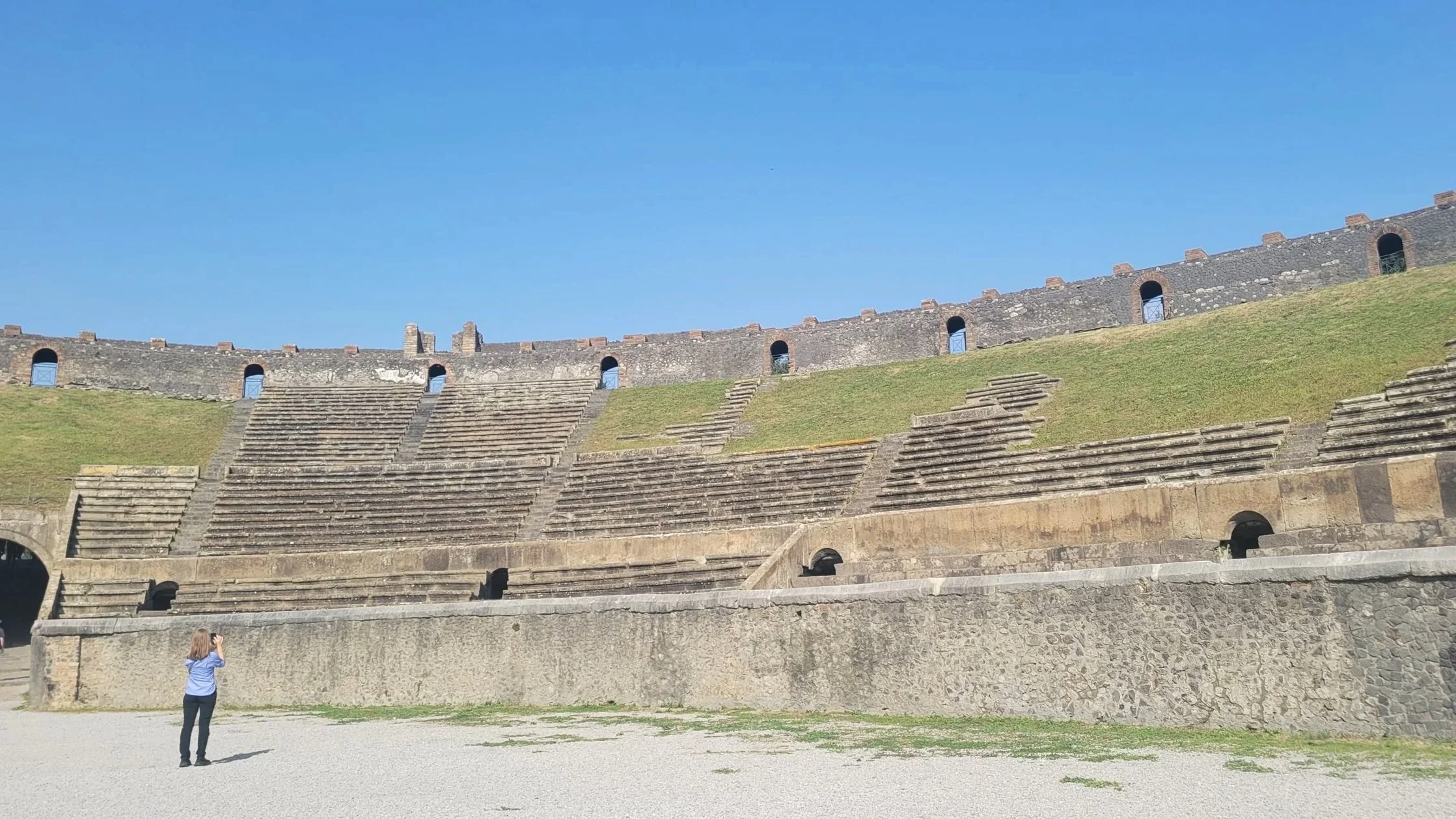
The Anfiteatro
2. Teatro Grande (Great Theatre)
Honestly, this one is just really cool to see. The horseshoe-shaped theatre is beautifully designed, and standing in it feels like the very definition of grandiose. The space is quite large, with seating available for around 5,000 people, built directly into the natural slope. Almost 75% of the seating currently remains. There’s not much more to say without diving into a full architecture lesson… but trust me, this is a spot worth checking out.
While you’re here, explore more of the theatre district. The Odeon/Small Theatre and the Triangular Forum are nearby, making it an easy loop without tons of walking.
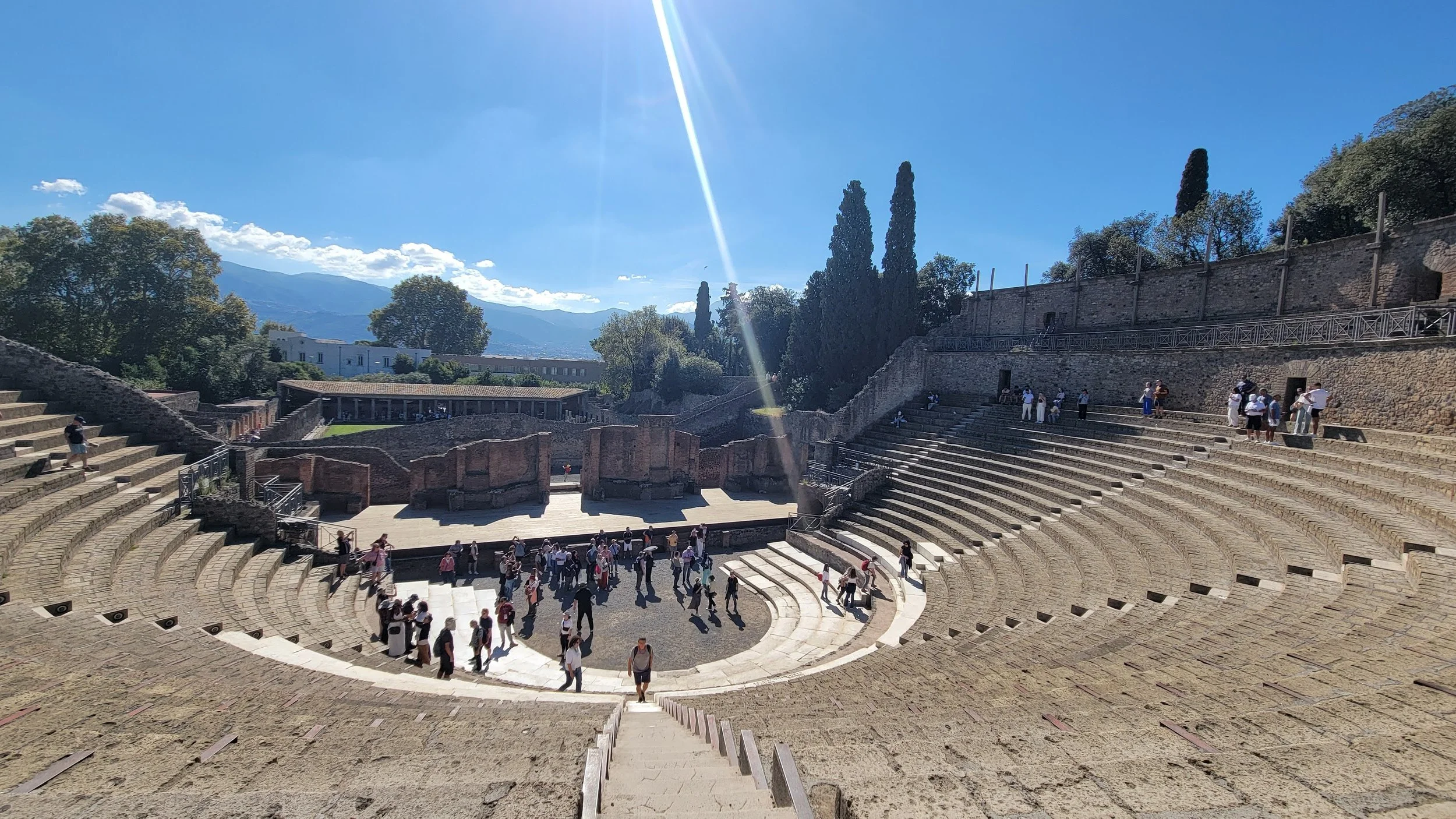
Teatro Grande from in the stands
3. Foro Civile (Forum)
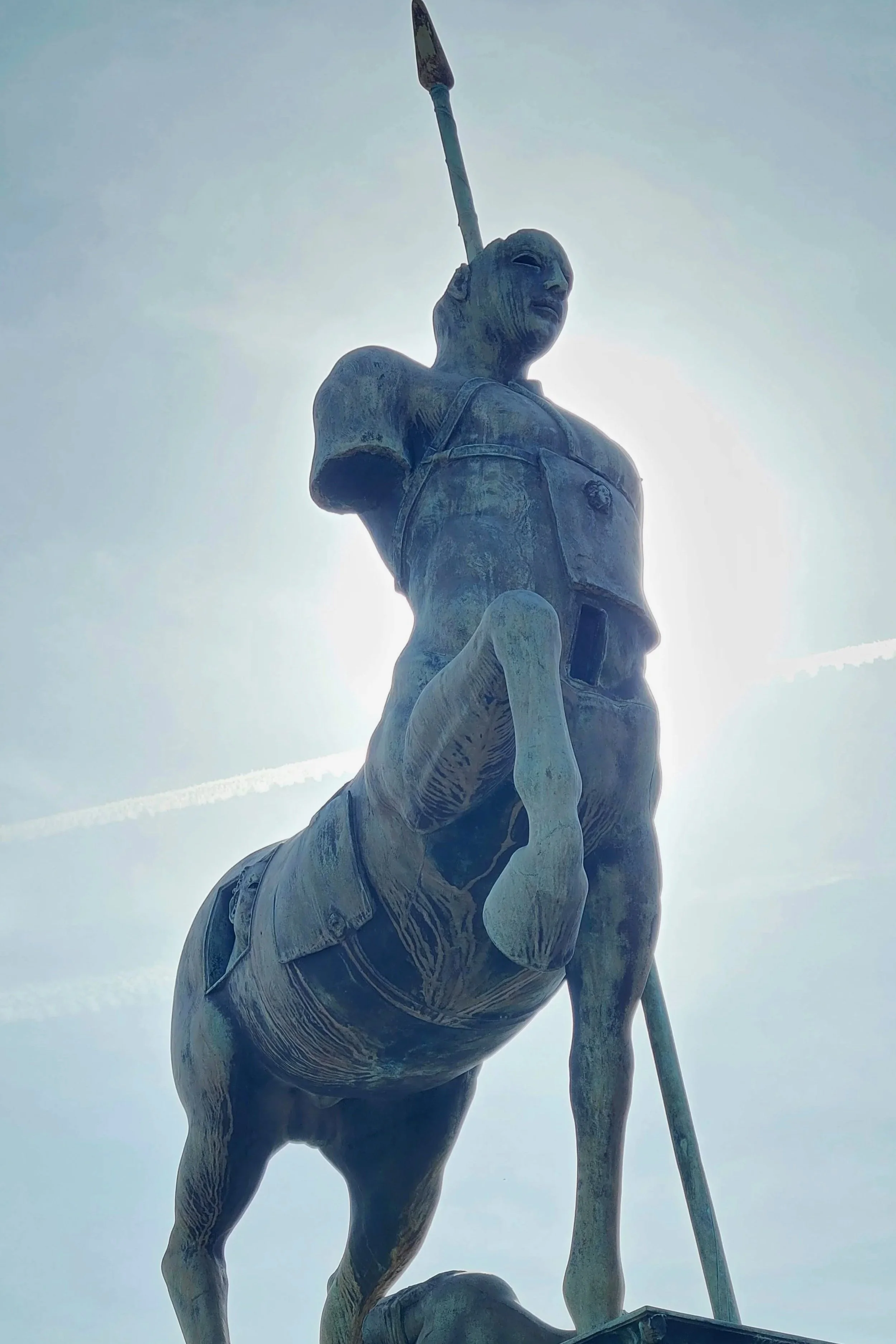
If you’re following the route I have on the map, try to enter the Forum from the south side. Walking into the impressive space from here allows you to take in its full scale the moment you arrive. In Ancient Rome, forums were the beating heart of their cities — spaces to hold markets, conduct politics, and so much more. The buildings that once lined this open-air space were some of the most important to Pompeian society. You’ll see the ruins of temples dedicated to gods, the courts, and administrative buildings alike.
Before heading to your next stop, walk through a few of the buildings that line it. My two picks are the Temple of Apollo and the Basilica, both found on the southwest side of the square.
4. Terme Stabiane (Stabian Baths)
A short walk from the Forum, you will find the Stabian Baths — the oldest and largest public baths in the city. Public bathing was the norm in Pompeii. They were more than just a means of hygiene; they became a space where people went to relax and socialize.
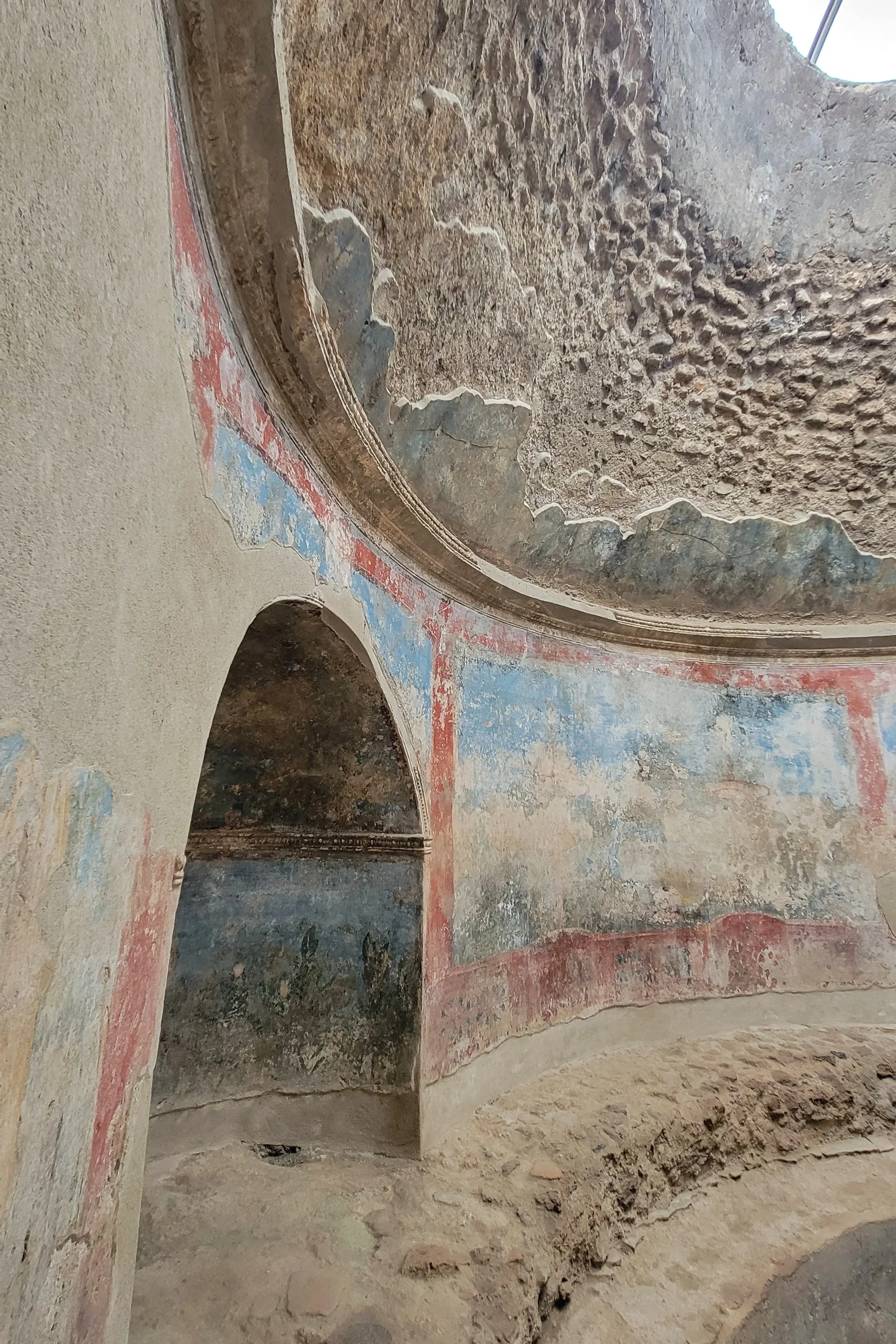
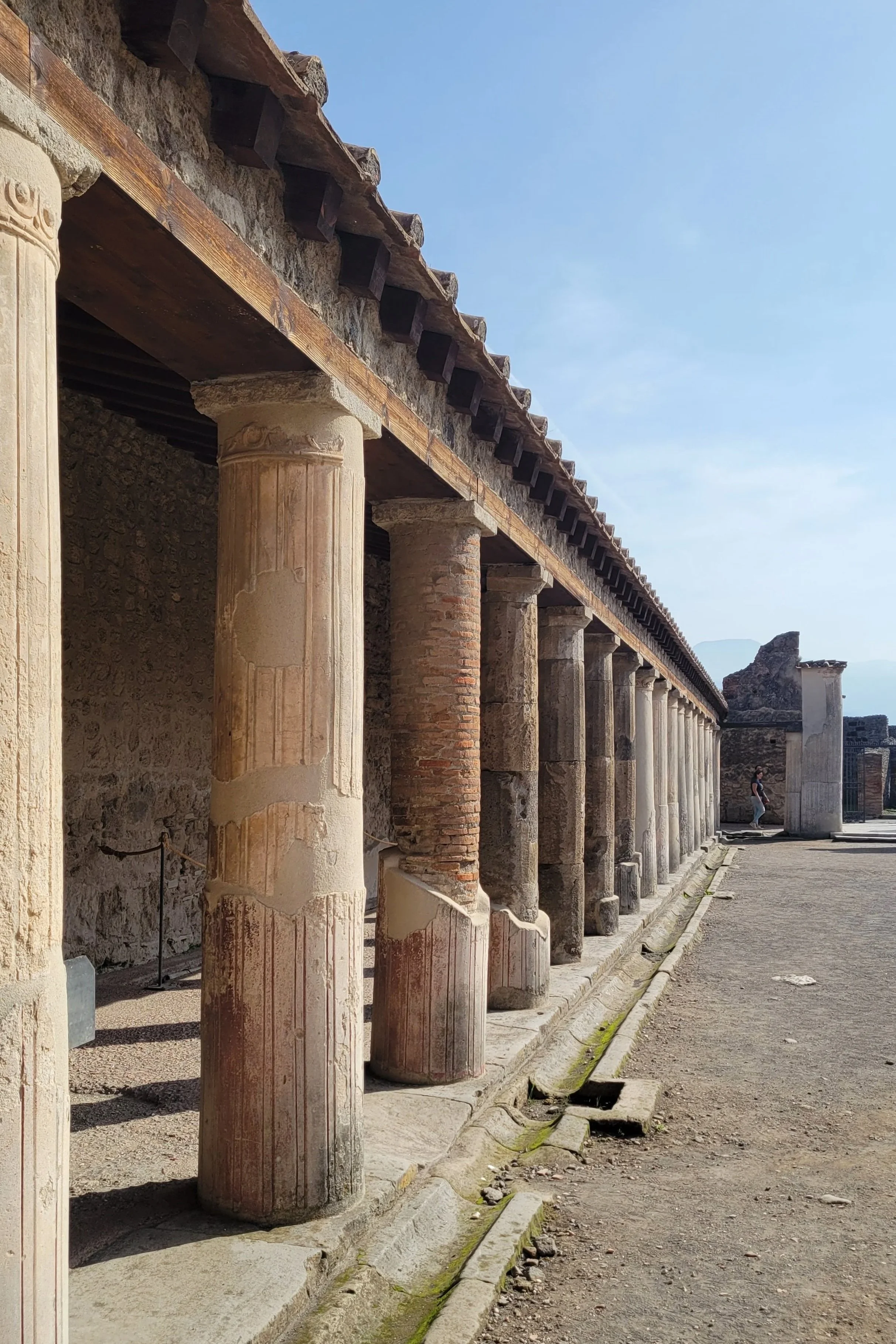
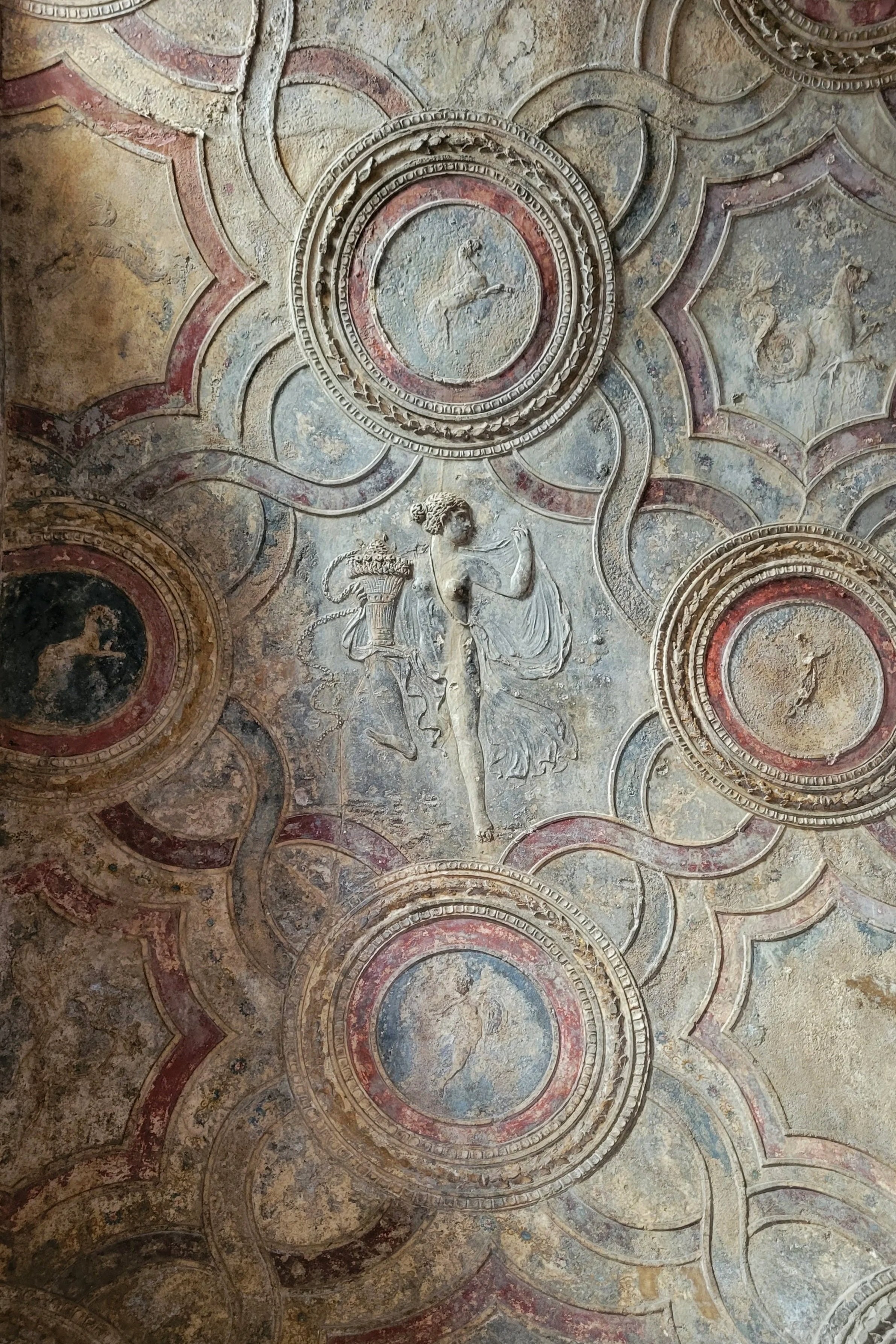
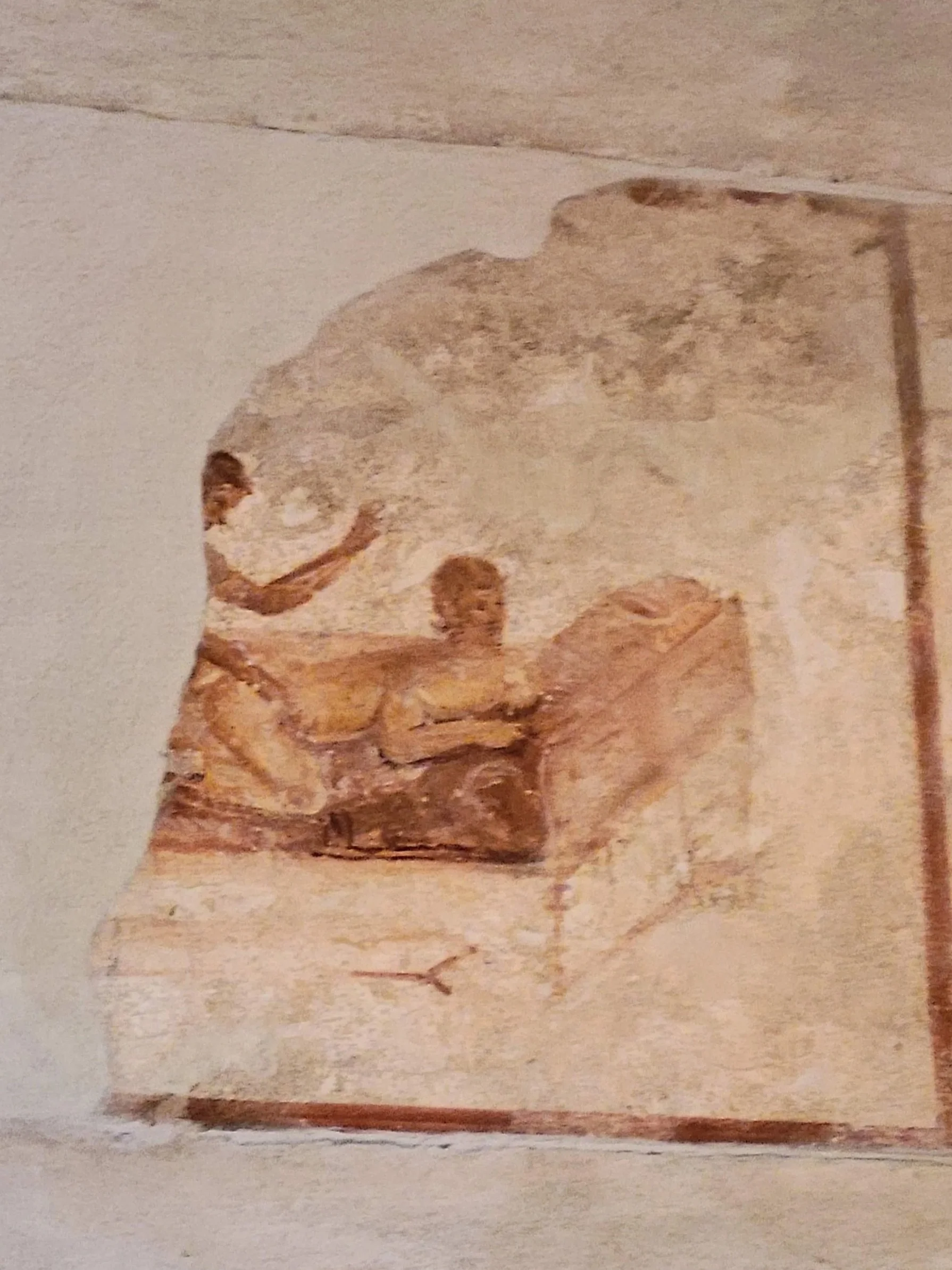
The bathhouse is beautiful, with intricate frescoes adorning its interiors and its meticulously designed layout of interconnecting spaces. Be sure to look up while you’re wandering through the complex; some of the best frescoes are on the ceilings!
5. Lupanare (Brothel)
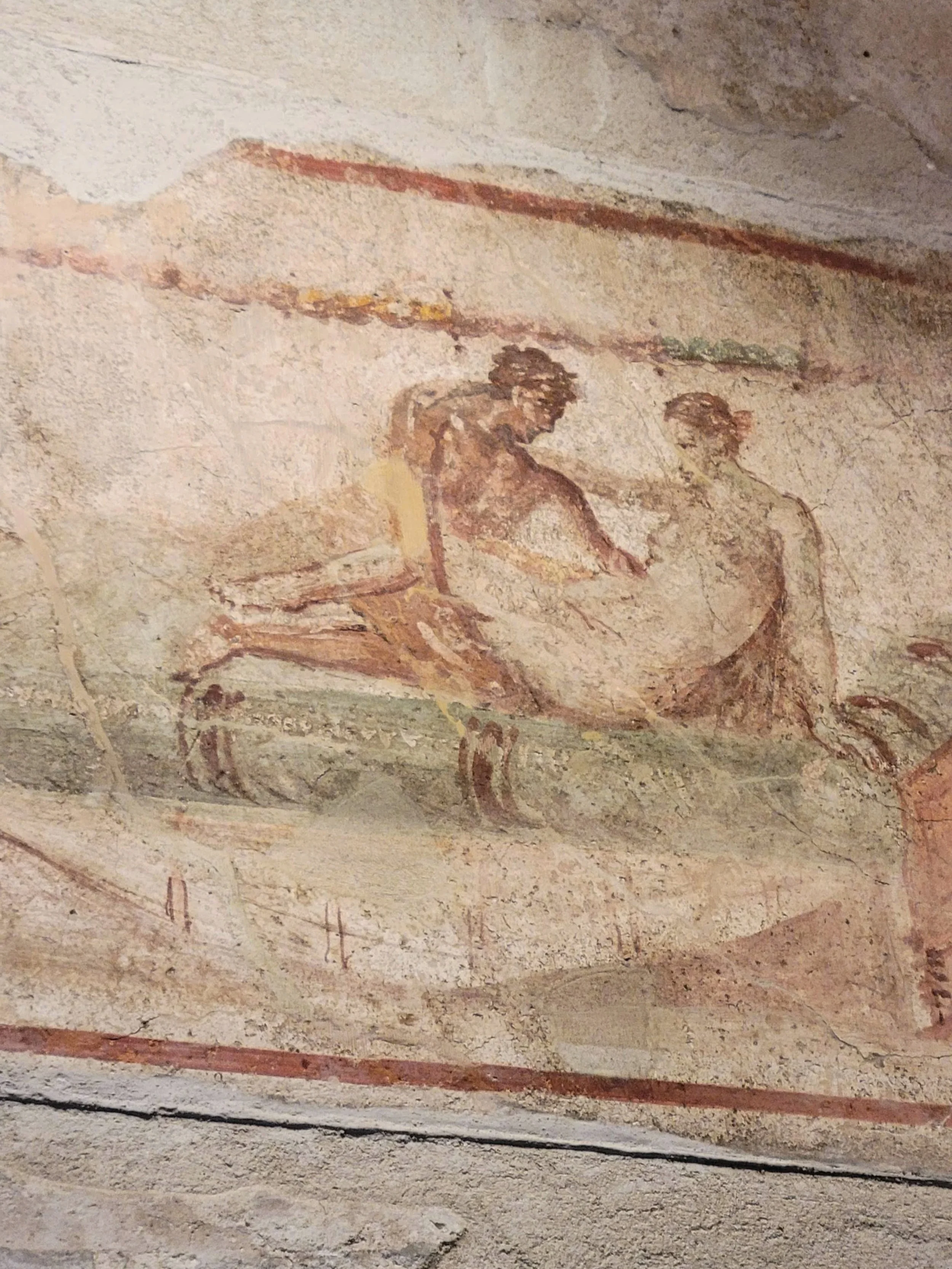
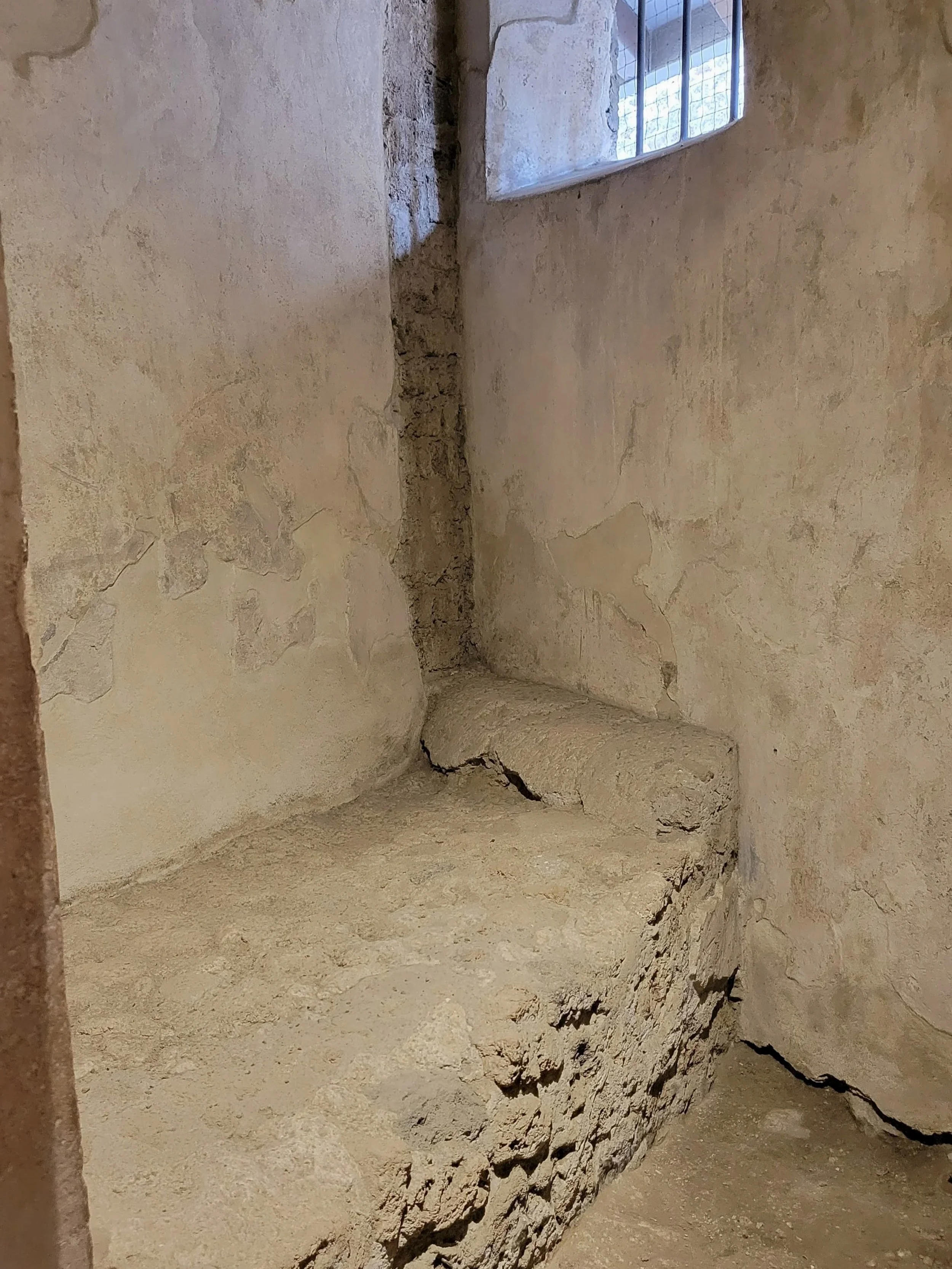
The Lupanare is one of the most sought-out locations in Pompeii, mainly due to its explicit paintings. You can find this popular stop a short walk up the road from the Stabian Baths.
The pictures above the doors provided the patrons a ‘menu’ of sorts, clearly indicating what might occur inside. Though seeing one of the world’s oldest versions of pornographic imagery is a novel experience, it is starkly contrasted with the reality of the people who worked here. They were often slaves and almost always victims of abuse, and the space leaves you with an echoing sorrow for them.
On a lighter note, while you’re in the area, keep your eye out for the signage that led visitors to the establishment. I’ll give you a couple of clues:
Look down, you’ll find them in the road
They are not exactly ‘PG13’
6. Villa Dei Misteri (Villa of the Mysteries)
This one’s a bit of a bonus stop depending on what ticket you get (it’s included in Pompeii+, but not Pompeii Express). I highly recommend spending the extra few dollars to get access to the Villa. Located at the very end of the necropolis are some extravagant complexes which are believed to have been vacation homes… despite being only a short walk from the busiest parts of the ancient city. These homes belonged to the richest of Pompeii’s residents. But Villa Dei Misteri takes the cake.
What makes it so special? Inside the Villa Dei Misteri is one of the city’s most well-preserved frescoes — a room with walls covered in brilliant red and life-size figures. The quality of these depictions, even 2,000 years later, is holding up better than most things from the past few decades! For this room alone, visiting the Villa is worth the extra fee.
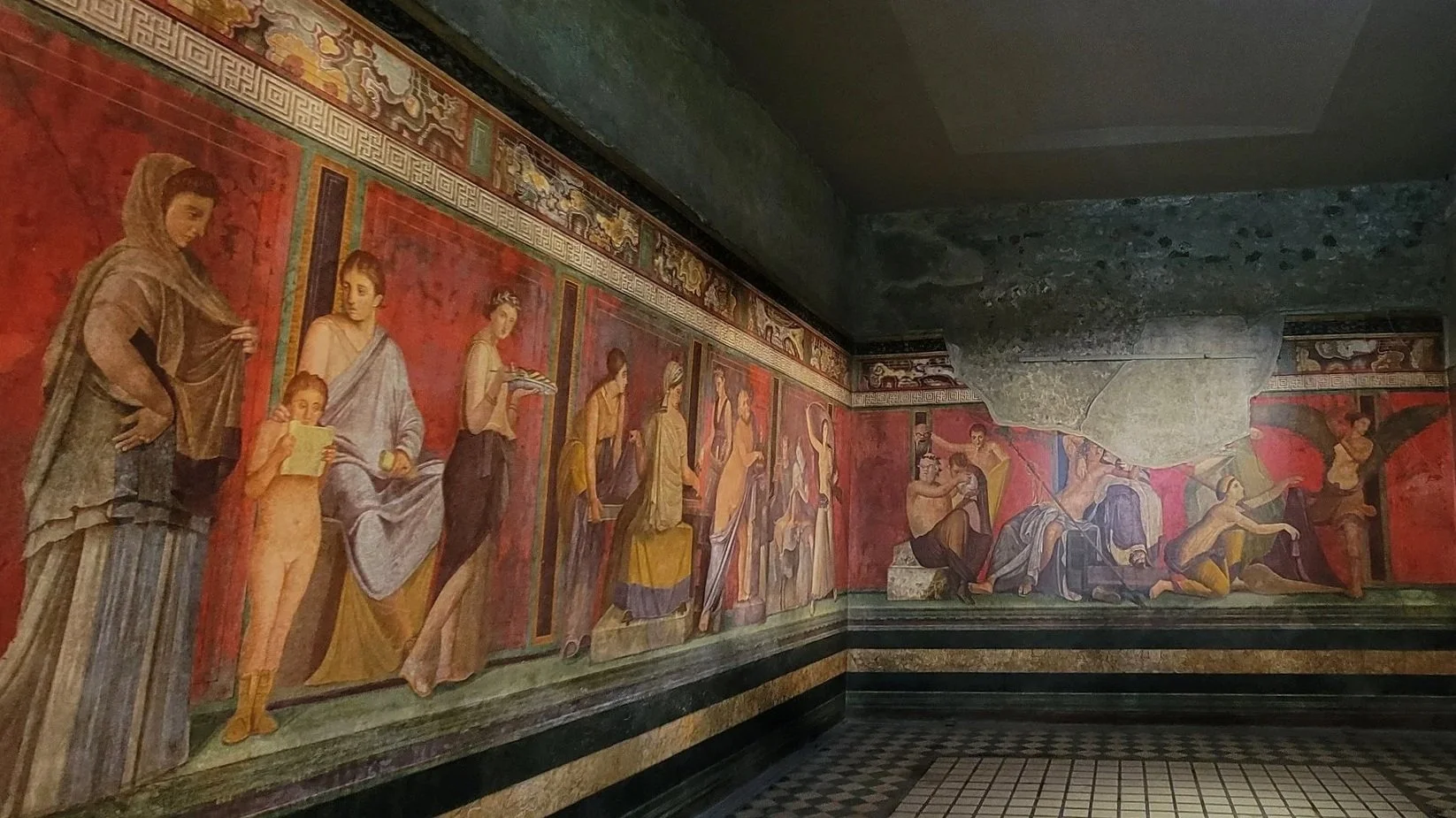
Fresco painted wall at the Villa of Mysteries
What to bring
Honestly, keep things light! Large bags are not allowed into the site, so only bring the essentials. I would recommend leaving any big bags at your accommodations, but if you need to bring them, the place we rented our audio guides from included bag storage in the cost.
Sun protection: there is almost no shade, especially during peak hours in the summer, so bring sunscreen and a hat to avoid getting burnt!
Water bottle: there are a couple of fountains in Pompeii to refill, so rather than carrying a huge bottle, bring a small one and fill up as you need.
Camera: whether it is your phone or an actual camera, you will want something to take pictures with. Make sure you’re going with a full battery or at least a small power bank!
